How to Cite
Abstract
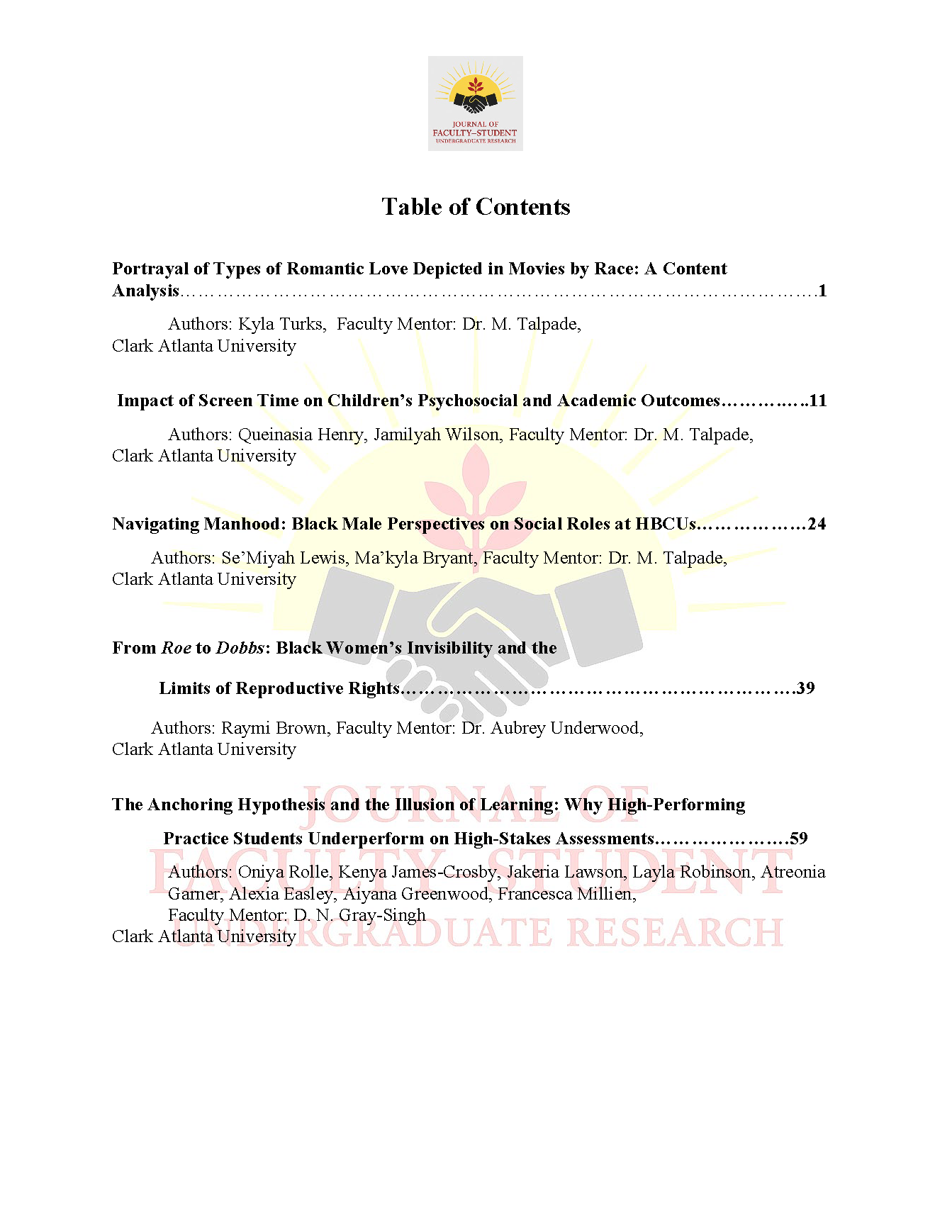
This qualitative study examines how Black male college students at Historically Black Colleges and Universities (HBCUs) understand, construct, and navigate socially prescribed masculine roles within their cultural and institutional environments. Prior research highlights the influence of ethnic-racial socialization (Jones et al., 2022) and masculinity performance (Wallace, 2007) on Black male identity, but less attention has been given to the specific impact of the HBCU context. Emerging scholarship shows that Black college men face complex mental health challenges shaped by trauma, racial discrimination, and cultural expectations (Bauer et al., 2022; Kogan et al., 2025), yet often avoid seeking help due to stigma, mistrust, and traditional masculine norms (Turner et al., 2024; Richardson, 2025).
Grounded in a phenomenological framework, this study explores how intersections of age, race, and lived experience shape meanings attached to roles such as provider, protector, and emotional anchor. While these roles reflect cultural values like resilience and collective uplift (Johnson & Florestal, 2024), they can also create psychological strain when tied to expectations of emotional suppression (Cloud, 2024; Ware et al., 2024).
Using in-depth, semi-structured interviews, this study centers the lived experiences of Black male students to understand how masculinity is reinforced and redefined within HBCU spaces. Findings aim to inform culturally responsive mental health interventions and institutional practices that better support Black men’s identity development and well-being.
Keywords: HBCU, masculinity, social roles, Black male identity, gender socialization, mental health